
A changed monsoon: why Marathwada still empties for the cane
In 2025 the rain came back to Marathwada — too much of it, too fast, in the wrong bursts. The crops drowned instead of dying of thirst, and the trucks filled anyway. This is what a broken climate does to a family's calendar, and what an ID card can and cannot fix.

Sudhir Sabhadinde
Secretary, Abhijeet Sevabhavi
For as long as anyone in Marathwada can remember, the reason the families left was that the sky would not open. Year after year of failed monsoons turned fields to dust, emptied the wells, and pushed more than a million people out of the region every winter to cut sugarcane somewhere wetter. Drought was the villain of the story. In 2025, the villain changed costume — and the ending stayed exactly the same.
Last year the rain came back to Marathwada. It came back with a vengeance: by late September the region had received more than 128% of its normal seasonal rainfall, well above the long-term average. On paper, that should have been salvation. In the fields, it was ruin. The rain did not fall the way a farmer needs it to — steady, soaking, spread across the season. It came in sudden, violent bursts, dumping weeks of water in hours and then vanishing.
When too much rain is its own kind of drought
A crop is not helped by the total on a rain gauge; it is helped by rain arriving at the right time in the right amount. When months of water fall in a handful of cloudbursts, standing fields flood, roots rot, and topsoil washes away. Across Marathwada in 2025, the damage cut through almost everything in the ground — soybean, cotton, tur, black gram, green gram, vegetables, sorghum, turmeric, and the sugarcane itself. Farmers who had prayed for rain through years of drought watched a single season of it destroy what they had planted.
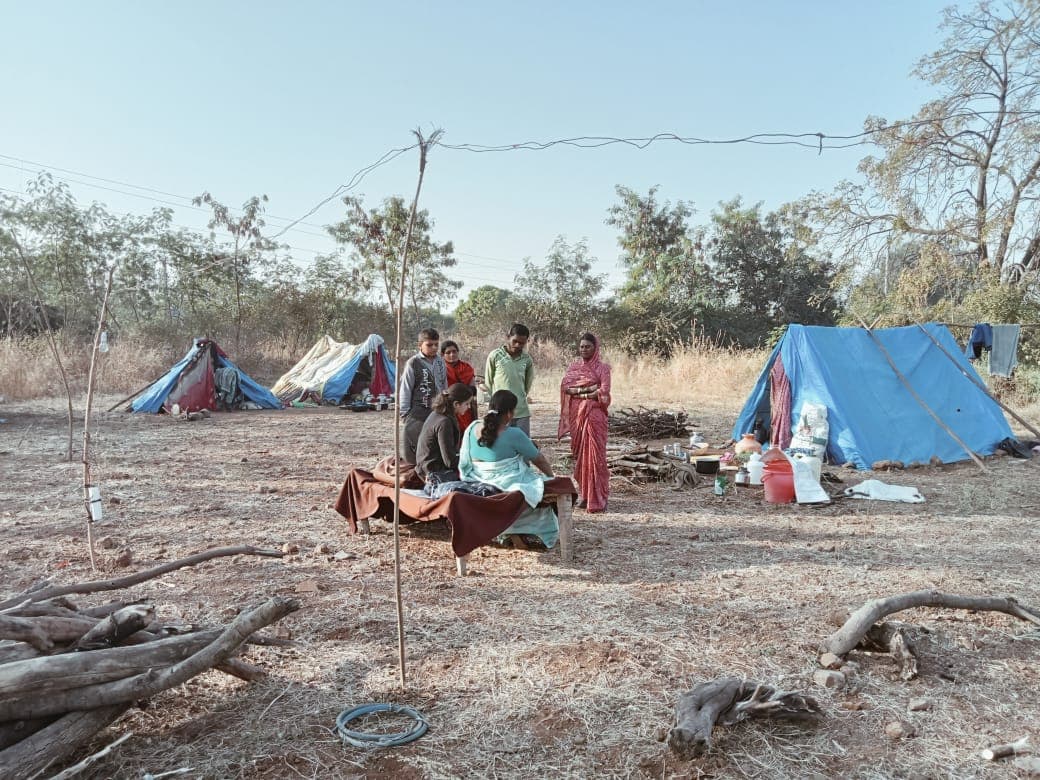
This is the climate whiplash that now defines the region: not simply less rain, but rain that has lost its rhythm. Drought one year, deluge the next, and neither one leaves a harvest a small farmer can live on. The old distinction — good monsoon means stay, bad monsoon means go — has quietly collapsed. Under a broken climate, both outcomes end with the same tarpaulin tent beside the same distant field.
Marathwada was always a hard place to farm, sitting in a rain shadow with thin soils and unreliable wells. What is new is the volatility. A farmer's entire craft is a bet placed months in advance — which crop, how much seed, when to sow — and that bet only pays when the seasons behave roughly as they have for generations. When the monsoon can arrive two weeks late, vanish for a month, and then return as a single destroying flood, the craft stops working. Experience, the one asset a poor farmer has always been able to rely on, is devalued a little more with every erratic year. You cannot plan against a sky that no longer keeps its word.
We used to migrate because there was no water. Now we migrate because the water came all at once and took the crop with it. Either way, we pack the koyta and go.
The migration that follows the failed field
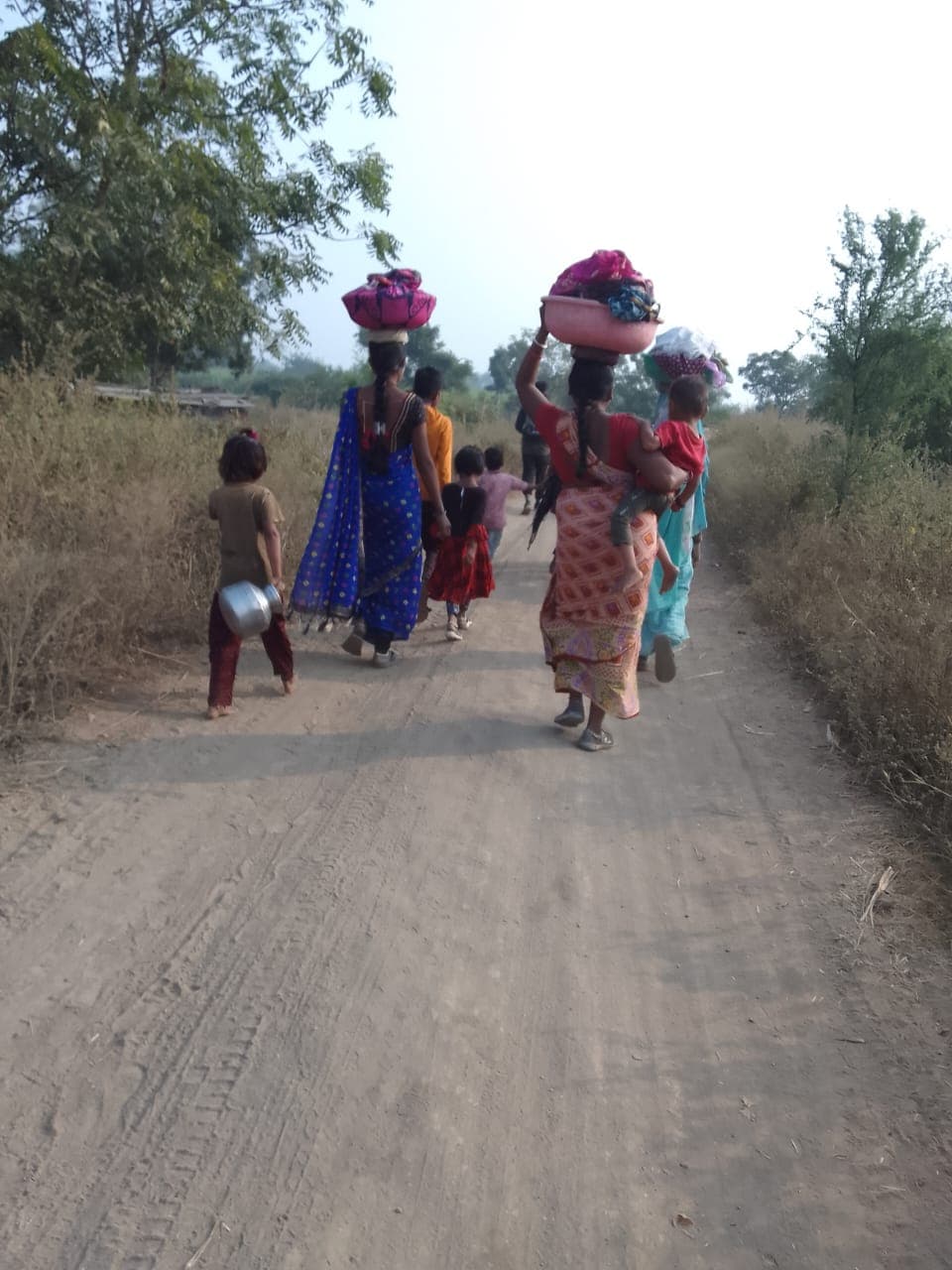
When the field fails, the family does the only thing the economy leaves open to it. A landless or small-holding couple takes an advance — the uchal — from a labour contractor, anywhere from sixty thousand to a lakh of rupees, and pledges the coming six months to working it off. They travel as a jodi, a pair, to the sugar belt of western Maharashtra and Karnataka, cutting cane from October through to April or May for a rate counted in a couple of hundred rupees per tonne. The advance that looked like rescue in a dry October becomes a debt of labour that owns the whole season.
And the pattern is spreading. Where migration once had a clear season, field teams now report families leaving even in summer — to jaggery units, to load and bundle cane, to whatever work exists — because a single failed harvest no longer leaves enough to wait for the next one. Climate instability does not just push more people to migrate; it stretches the migration across more of the year, and with it every harm that travels alongside: children out of school, women without healthcare, wages without protection.
The advance that becomes a chain
It is worth being precise about how the advance works, because it is the hinge the whole system turns on. The uchal is not a wage paid ahead; it is a debt denominated in labour. A couple that takes a lakh of rupees in October has effectively sold the next six months at a rate someone else has set, and the contractor keeps the books. Fall sick, and the days lost are added to what you owe. Fail to cut the tonnage, and the shortfall rolls into next season's advance. Families describe leaving one harvest still owing — which forces them to take a fresh advance simply to clear the last, a cane-cutter's version of a debt that never quite closes.
Inside that structure, every other harm we write about finds its root. A woman cannot afford to rest, because rest is deducted. A child works alongside her parents, because an extra pair of hands clears the debt faster. A worker injured on the job has, until now, had no card, no record and no claim. The advance is what makes a family's time cheap — and cheap time is what the whole harvest is quietly built on.
An ID card in a worker's hand: the 2025 welfare push
There is one development worth genuine hope. For years, sugarcane cutters have been effectively invisible to the state — no register, no records, no proof that the work or the worker exists. An invisible worker cannot claim a scheme, a compensation, or a right. In 2025, the state moved to change that.
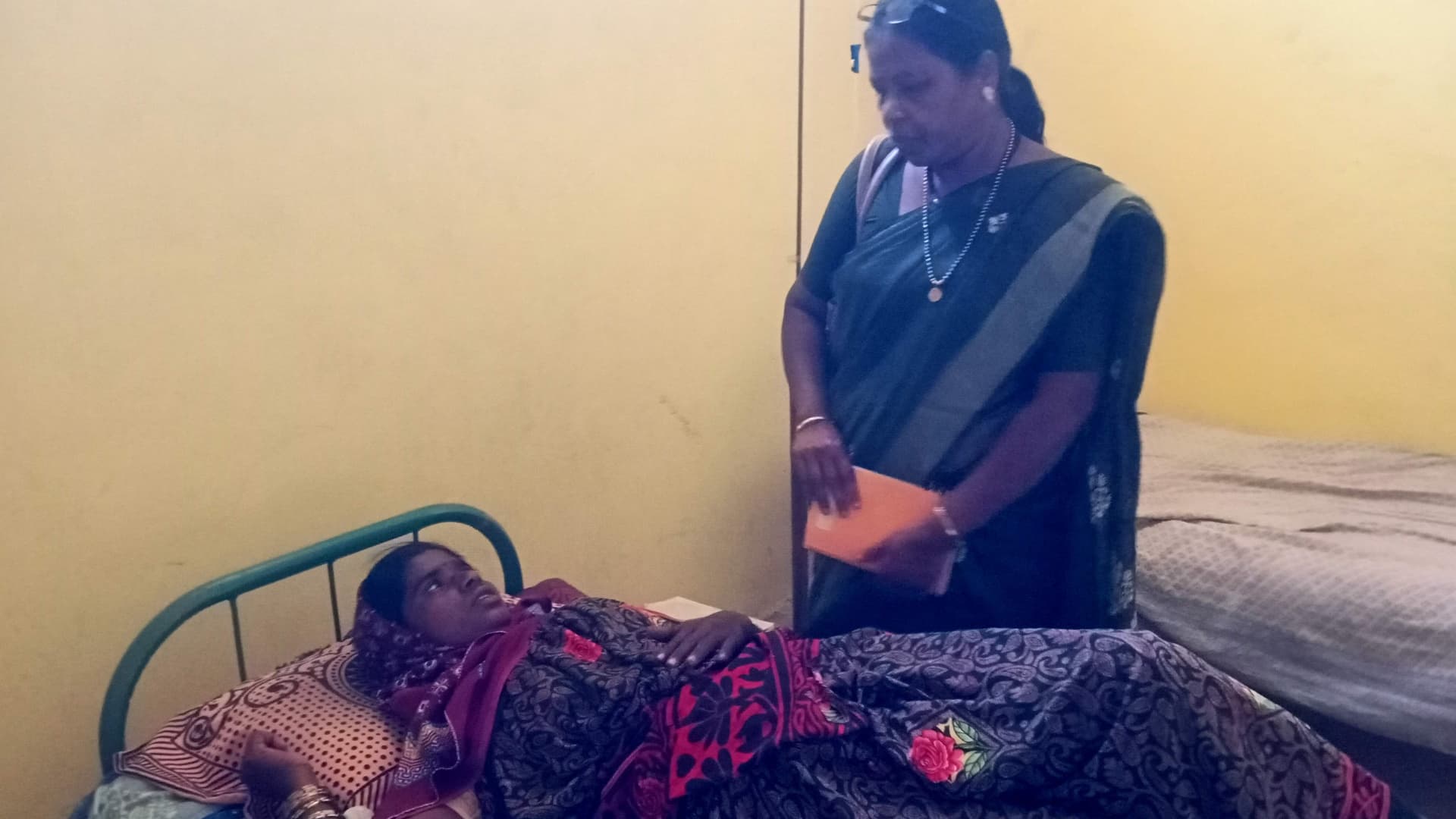
Through the Loknete Gopinath Munde Sugarcane Workers Welfare Corporation — the body set up in 2019 to look after these labourers — the Social Justice department launched a statewide survey to register cane cutters and issue them identification cards. The aim is simple and overdue: a documented worker can finally be connected to welfare schemes designed for them, including the corporation's ex-gratia grant that pays a worker or their family in the event of death or disability from an accident on the job. An ID card sounds like a small thing. For a worker who has never officially existed, it is the difference between a right on paper and a right you can actually claim.
Where Abhijeet Sevabhavi comes in
The drought years left their own mark that the return of the rain has not erased. Through the dry decade, families across Marathwada chased vanishing groundwater by deepening wells and sinking borewells, often on borrowed money, only to watch them run dry as the water table fell further. Many carry that debt still. So when the 2025 cloudbursts washed away a standing crop, they did not fall from a standing start — they fell onto old loans taken to survive the last disaster. This is what climate distress looks like up close: not a single bad year, but each shock landing on the unhealed wound of the one before.
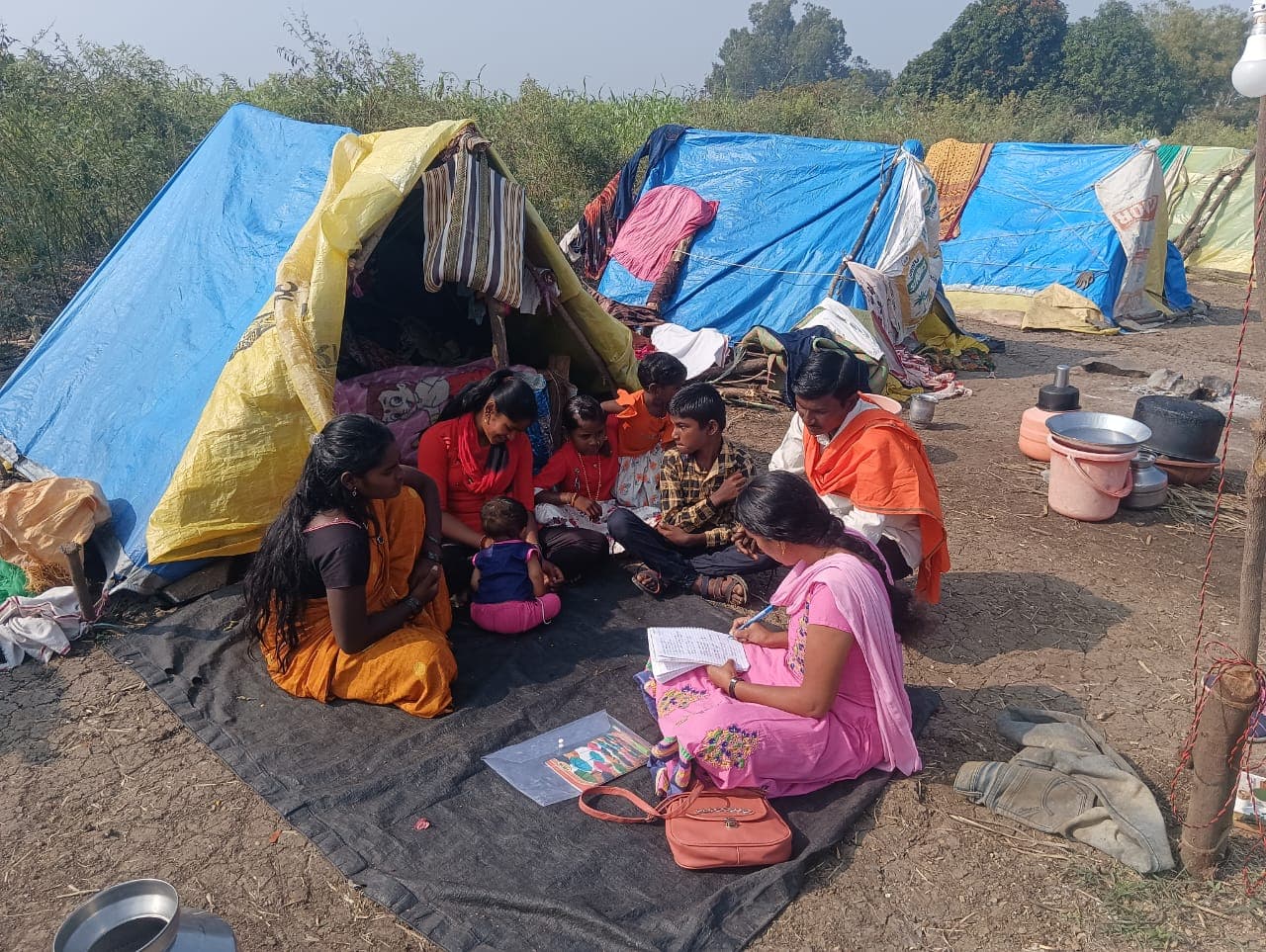
We work at both ends of this migration — the field a family leaves and the camp it arrives in — because the crisis lives in the journey between them. A changed climate is not something a single organisation can fix. But the human cost of that changed climate is something we can meet, family by family.
- Farmer livelihood support — helping small farmers move toward more resilient, water-wise cultivation so a household has a reason and a means to stay, rather than being forced onto the truck by the first failed season.
- Disaster and flood relief when the cloudbursts hit, reaching the families whose crops and homes the water took — the work that keeps a bad season from becoming a lost decade.
- Helping workers claim what is now theirs — connecting families to the welfare registration and ID-card drive, so the protections announced in 2025 actually reach the tents by the fields.
- Standing with the families through the whole migration — the healthcare, schooling and organising we carry into the camps, so that a season away from home costs a family less than it did the year before.
Reversing that logic is slow, unglamorous work. It means helping a household hold on to its topsoil and its water — bunds and trenches that catch a cloudburst instead of letting it scour the field, crops and varieties chosen to survive erratic rain rather than a perfect monsoon, kitchen gardens and small livestock that put food on the plate when the main crop fails, and savings groups that mean the next shock is met with a neighbour's support instead of a contractor's advance. None of it makes a headline. All of it is the difference between a family that can choose to stay and a family that has no choice but to go.
The monsoon has changed, and it is not changing back. What we can decide is whether a family in Marathwada faces that changed sky with nothing but an advance and a contractor's word — or with a resilient field to stay for, a card that makes them count, and neighbours who refuse to let them travel alone. That choice is not the climate's to make. It is ours.
- 1Mongabay India — intense rains inundate a region known for droughts (2025)
- 2Mongabay India — drought forces Marathwada farmers to migrate as sugarcane cutters
- 3Loknete Gopinath Munde Sugarcane Workers Welfare Corporation — Govt. of Maharashtra
- 4ChiniMandi — Maharashtra launches statewide survey to register sugarcane cutters
- 5IndiaSpend — why Marathwada's farm workers are migrating even in summer

Stories change when someone stays.
Everything you read here is work in progress. Stand with the families behind these stories — your support keeps us returning, season after season.