
Children of the cane: what it costs to miss half a year of school
When their parents follow the harvest, hundreds of thousands of children lose six months of the classroom — every single year. In 2025 the state approved new hostels to keep them learning. Whether they work depends on what happens next.
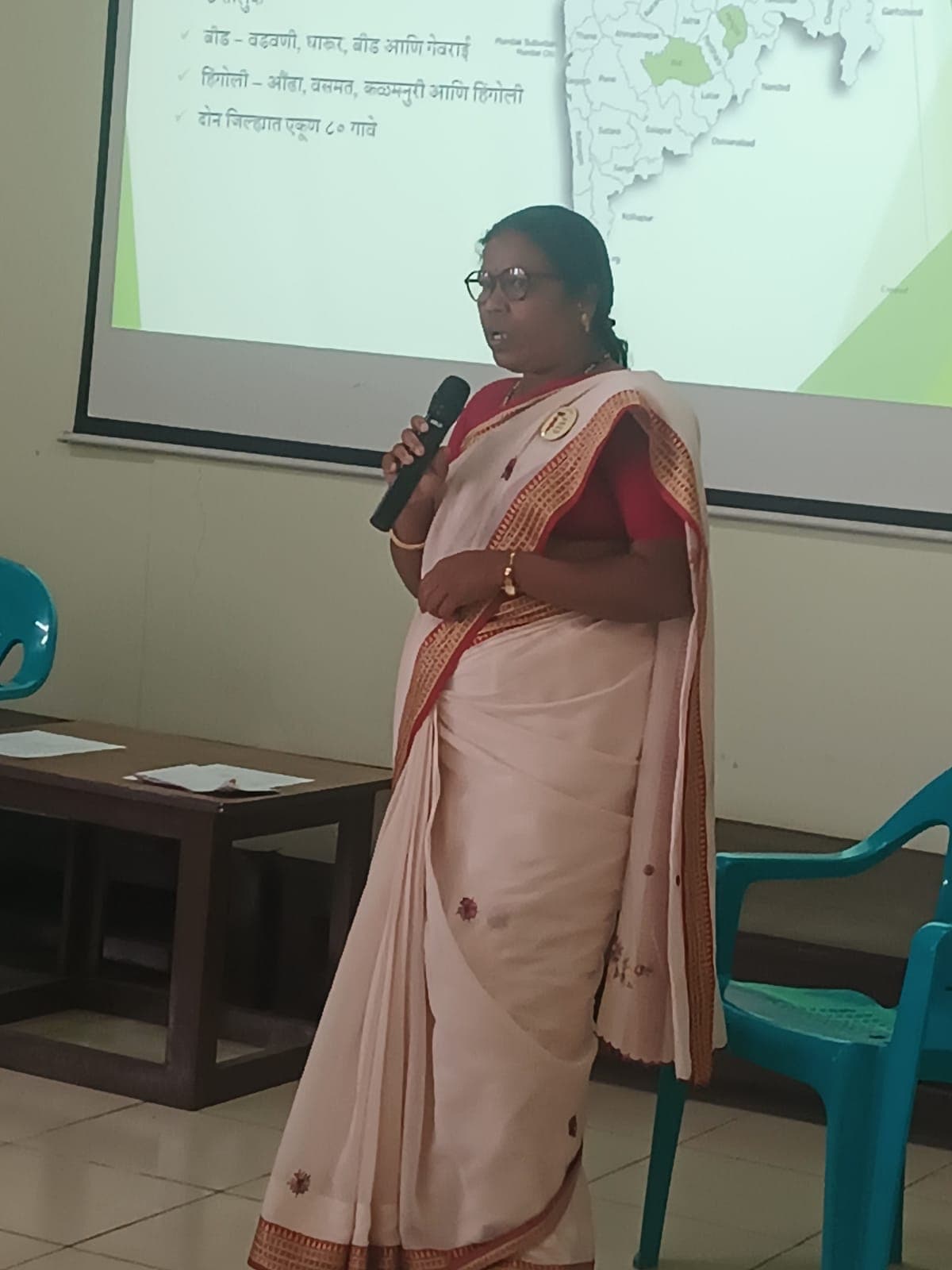
Chhaya Padghan
Vice President, Abhijeet Sevabhavi
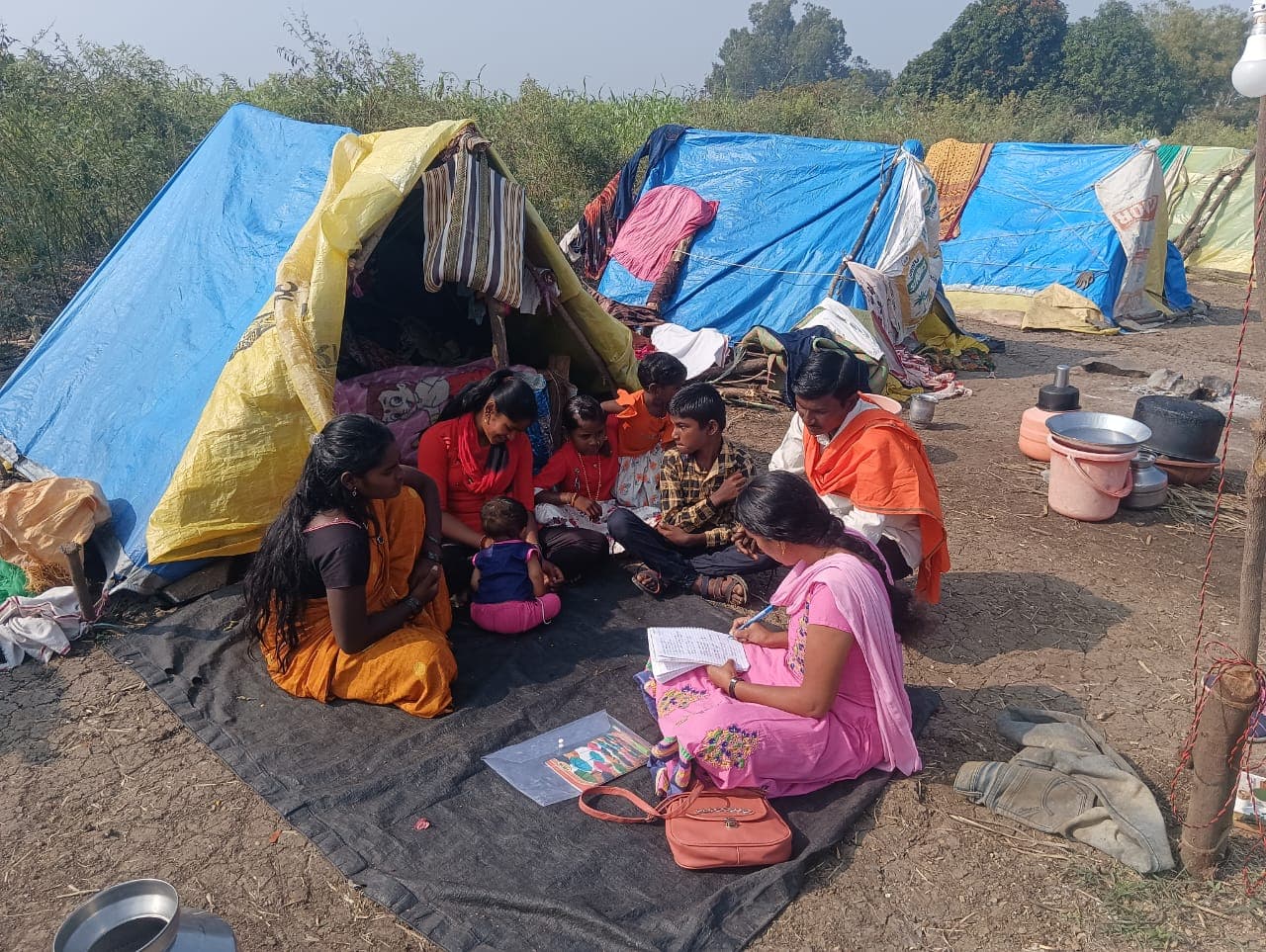
A school year in Maharashtra runs a little over two hundred days. A child whose parents cut sugarcane will, in a bad year, sit in a classroom for barely half of them. The rest of the calendar she spends on a truck, in a tent, and beside a field — old enough to mind a younger sibling, too young to understand why the alphabet on the wall keeps changing back to where she started.
This is the quiet arithmetic of migration. When a family locks its door in October and follows the harvest to the sugar belt, the children go too. There is no one to leave them with, and the camps are hundreds of kilometres from home. By the time the family returns in April or May, the school year is nearly over — and the child has missed the half that mattered most.
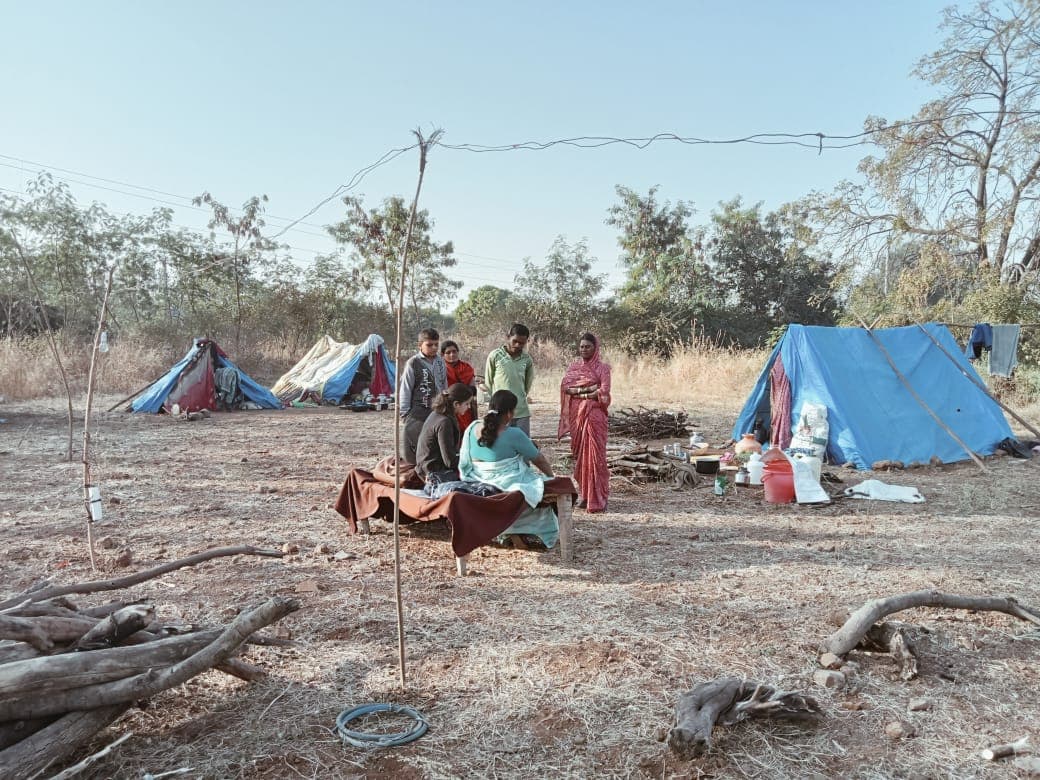
Picture the day itself. The parents rise before light and are gone to the field, the koyta swinging, before the sun clears the cane. There is no bus that runs from a roadside camp to a village school, no fees paid, no uniform packed, no teacher who knows the child's name. The younger ones are left in the care of the older ones; the older ones are handed a task. Somewhere a classroom back home keeps a seat with the child's name on the register, ticking off absences she has no way to prevent. It is not that these families do not value school. It is that the season does not leave a door open to it.
The dropout trap, one season at a time
Missing six months of school is not a gap you simply fill in later. Studies of migrant cane-cutter families describe a predictable, cruel sequence. A child is absent for the migration months. On return she has missed the syllabus, so she fails the year's assessment. Failing, she is held back — often with children years younger than her. Humiliated and behind, she stops coming. And so a child who was never unable to learn is quietly converted into a school dropout by nothing more than the family's need to eat.
For girls the trap closes faster. A daughter who has fallen behind is the first to be kept back to mind the household or a baby, and the first to be married early once school no longer seems worth the fees and the walk. Every season of lost schooling narrows a girl's future by a measurable amount — and the harvest asks for that season every single year.
Multiply one child by the size of the migration and the loss turns generational. More than a million people leave Marathwada and the regions around it for the harvest each year, and a large share travel as whole families, children included. That is not a handful of interrupted educations; it is a recurring, predictable subtraction from the futures of hundreds of thousands of the country's poorest children — happening in plain sight, every season, to pay for a commodity every one of us consumes.
The sakhar shala, and why it isn't enough
The state's long-standing answer has been the sakhar shala — the ‘sugar school’, run near the mills so that children who travel with the harvest can keep learning. On paper it follows the same state curriculum as any village school. In practice, the sugar schools have never been able to catch every child who slips past them.
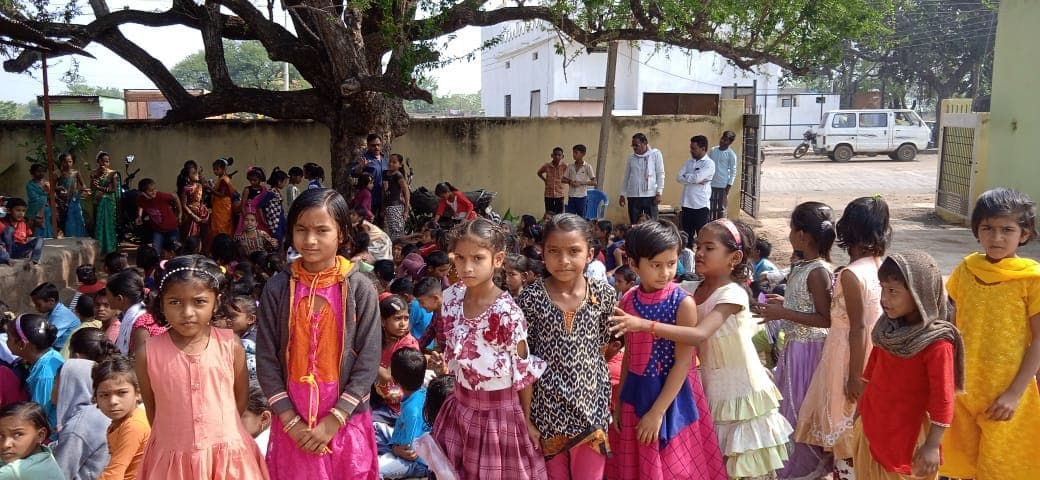
The reasons are practical and grinding. A camp is pitched wherever the cane is being cut, and the cane is not cut next door to a school. Families have reported the nearest sakhar shala sitting as far as fourteen kilometres from where they sleep — an impossible daily journey for a six-year-old whose parents are already gone to the fields by dawn. A child who cannot reach the school is, for that season, simply not in school, no matter how many schools exist on a district map.
The cost you can't see on a report card
Attendance registers capture only the shallowest part of the loss. A child who reads fluently in October and does not open a book until May does not simply pause; she slides backward, unlearning letters and number facts that then have to be won a second time. Wealthier countries call it the ‘summer slide’ and treat a six-week gap as a serious problem. These children face a six-month gap, every year, on top of homes where no adult was ever given the chance to learn to read. The deficit compounds. By middle school a migrant child who has technically been enrolled for years may still be reading at the level of a child half her age — and it is that invisible gap, not the absence itself, that finally convinces a family the schooling is not working and the child may as well come to the field.
A bridge class is not a miniature school; it is a lifeline thrown across that six-month gap. In an hour or two a day beside the camp, a teacher keeps the core alive — reading aloud, basic sums, writing the child's own name and village — so the thread of learning is never fully cut. The aim is not to finish the syllabus in a tent. It is to make sure that when the family returns, the child can be placed back among her own age group instead of being held back, humiliated, and lost.
What changed in 2025: the promise of the hostel
In 2025, the Maharashtra Cabinet cleared new hostels specifically for the children of sugarcane workers — a recognition, at last, that the surest way to protect a child's schooling is to let the child stay put while the parents migrate.
The route runs through the Sant Bhagwanbaba Government Hostel Scheme, which provides residential places for the children of cane cutters — reaching, on paper, from the fifth standard all the way up to undergraduate and postgraduate study. A place comes with the ordinary dignities a studying child needs and a migrant family often cannot guarantee: a cot, a mattress, bedding, a fixed roof, and above all a school year that is not interrupted by a truck. For a family, it changes the terrible choice at the heart of every season — take the child and lose her schooling, or leave her behind with no one to keep her safe.
We welcome the decision. But we have watched enough good schemes stall on the last mile to know that approval is the beginning, not the end. A hostel announced in a Cabinet meeting only helps a child whose parents know it exists, can complete the forms, trust the institution with their daughter, and can reach it before the enrolment window closes — all while packing to leave for six months. The families most in need of the scheme are exactly the ones least able to navigate it alone.
What Abhijeet Sevabhavi does in the gap
Our education work lives in the distance between a scheme on paper and a child in a classroom. That distance is where children are lost, and it is where we spend our seasons.
- Bridge classes that travel with the families — informal lessons at the roadside camps so a child keeps reading, writing and counting through the migration months instead of losing them whole.
- Enrolment and re-entry help, so a child who has missed six months is placed back at the right level on return, not held back into humiliation and dropout.
- Connecting families to the hostel and sakhar shala schemes they are entitled to — walking parents through the paperwork, the trust, and the timing that the schemes assume but rarely explain.
- Keeping girls in the count, because they are the first to be pulled out and the last to be sent back, and because a girl who finishes school changes the arithmetic of the next generation entirely.
I can read the board now. When we go for the cane, I teach my little brother the letters so he doesn't forget them like I did the first year.
None of this is charity in the old sense; it is repair. Every child we keep reading through a migration season is a child who does not have to be held back, does not have to feel stupid in front of children years younger, and does not become one more statistic quietly dropped from the rolls. And because we work through the same relationships that let us into the camps for health and organising, the education work does not stand alone — it is woven into everything else we carry to a family, so that the child at the desk and the mother at the health camp and the father claiming his worker's card are all part of one continuous act of standing beside them.
A country that depends on these families for its sugar owes their children more than a half-year education and a place on a waiting list. The 2025 hostels are a real step, and we will use every one of them. But the promise on paper becomes a child at a desk only when someone walks the last mile with the family — and that is the mile we intend to keep walking, season after season, until missing half of school is no longer the price of being born to the people who feed India.
- 1Free Press Journal — Maharashtra Cabinet clears hostels for children of sugarcane workers
- 2Sant Bhagwanbaba Government Hostel Scheme — Social Justice & Special Assistance Dept, Govt. of Maharashtra
- 3EquityEdHub — children of migrant sugarcane workers skip half their classes every year
- 4People's Archive of Rural India (PARI) — ‘A bitter harvest’


Stories change when someone stays.
Everything you read here is work in progress. Stand with the families behind these stories — your support keeps us returning, season after season.